Pipe Fencing in Amarillo, TX
Heavy-duty welded pipe fence, cattle pens, alley chutes, and corral systems built for real West Texas ranching operations.
Homerun Fabrication builds welded pipe fencing, cattle pens, and working facilities in Amarillo, TX and across the Texas Panhandle. Pipe fencing is welded steel pipe construction for livestock containment, working facilities, and ranch perimeters — rails of 2-3/8" or 2-7/8" oilfield pipe welded to set posts of larger 4-1/2"+ pipe. It's the standard for serious cattle operations because it stands up to pressure that breaks barbed wire and bends sucker rod. Most cattle pen jobs run several thousand dollars depending on linear footage, gate count, and working equipment.
We've built corrals, alley chutes, working facilities, and perimeter pipe fence for ranches across the region since 2008 — welded in place, not pinned together.
Working Facilities Built for Pressure
The difference between a working facility that lasts twenty years and one that's bent up after one season is the steel and the welds. Our cattle pens use heavy-gauge oilfield pipe, set posts in concrete, and continuous welded rails — no bolted brackets, no pinned connections, no slip joints to fail.
That matters when you've got 1,400-pound cows pushing the alley, or a working chute taking the same brute force hit twice a day for years. Build it once, build it heavy.
What does a complete cattle working facility include?
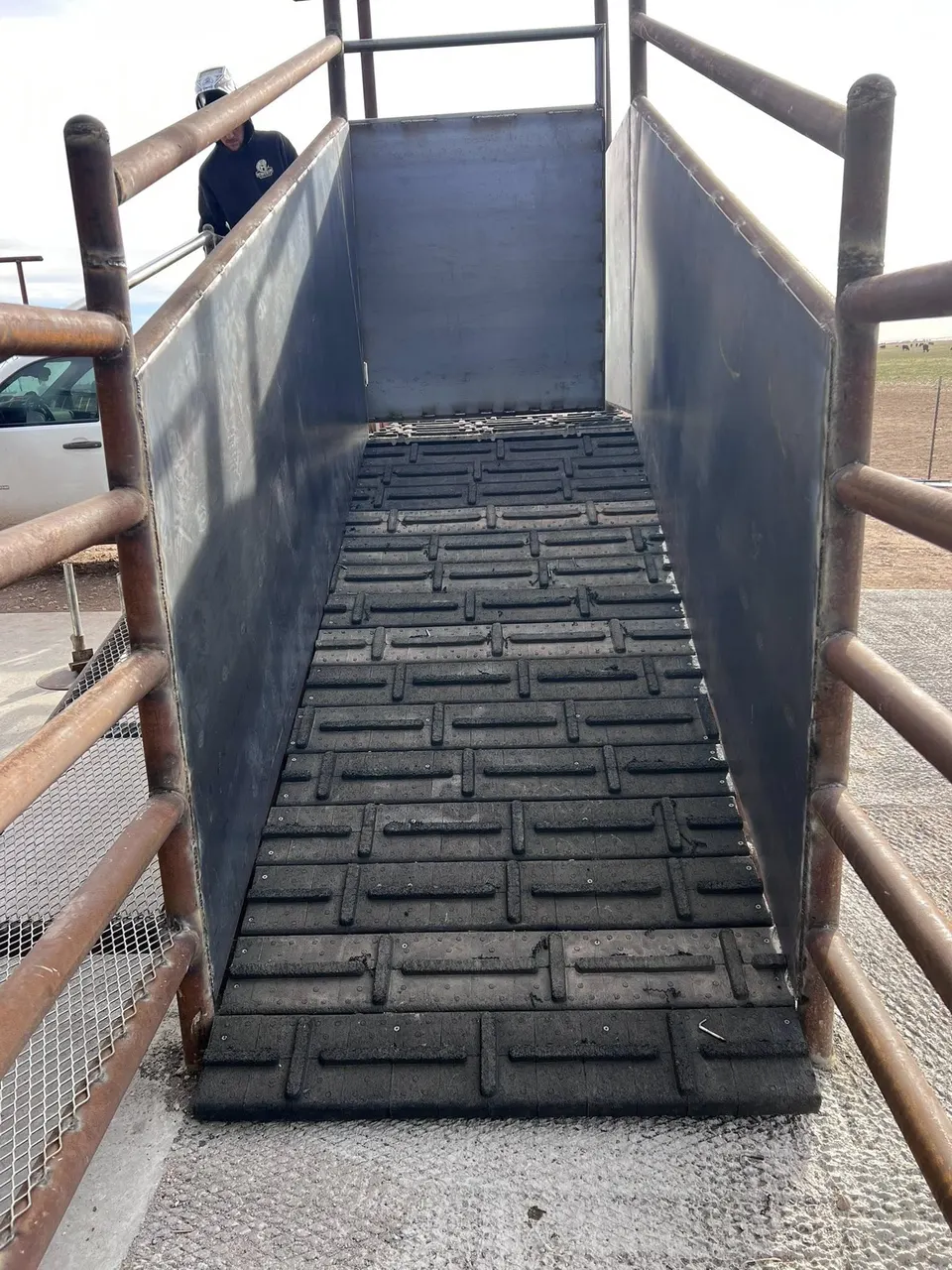
A complete Homerun Fabrication working facility typically includes a holding pen, sweep or crowd tub, alley with sliding gates, working chute with head gate (or steel framework around the customer's preferred chute), palpation cage, loading ramp to a truck or trailer, and heavy-duty entry/exit gates. Rubber matting in the alley reduces slips. We build the steel and integrate whatever working equipment the operation runs.
Covered Working Areas
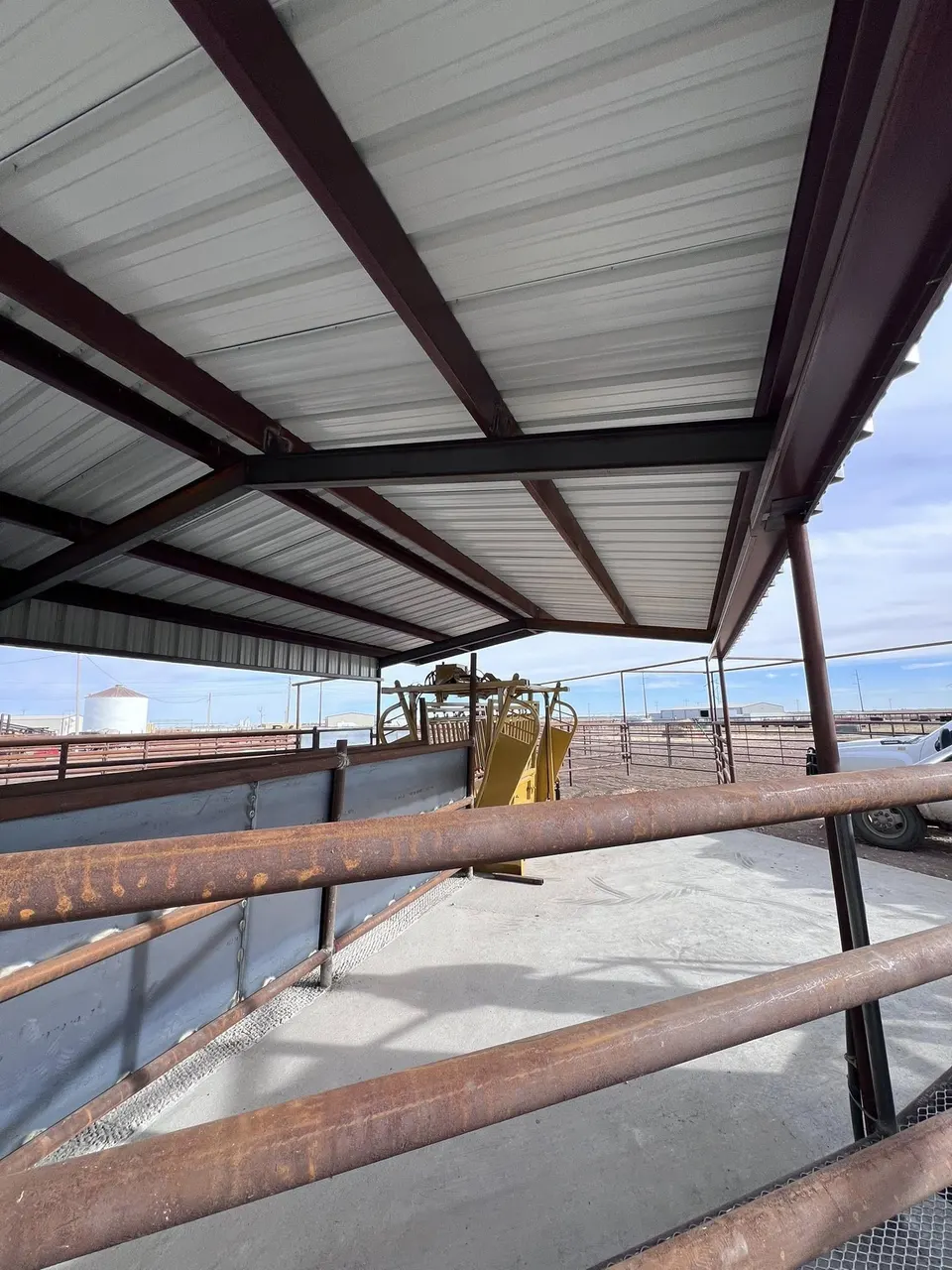
Working cattle in 100-degree heat or driving West Texas hail is brutal on both the cows and the crew. We build covered working areas — steel-framed roofs over the working chute and alley — that take the weather out of the equation.
Cover spans are tied into the same red-iron framing we use for ag steel buildings, so they're rated for Panhandle wind loads and built to last as long as the pens underneath them.
Pipe Fencing Applications
What we build for ranchers and ag operations across the Texas Panhandle.
Cattle Pens & Corrals
Holding pens, sorting pens, and corral systems sized to your herd and your working flow.
Working Alleys & Chutes
Welded alleys, sweep tubs, and working chutes built for daily cattle pressure.
Loading Ramps
Truck and trailer loading ramps with non-slip surface and pipe sidewalls.
Perimeter Pipe Fence
Continuous welded pipe perimeter for pastures, traps, and ranch entrances.
Gates & Cattle Guards
Heavy-duty welded gates, swing gates, sliding alley gates, and steel cattle guards.
Covered Pen Roofing
Steel-framed roof structures over working areas for shade and weather protection.
Inside the Barn, Too
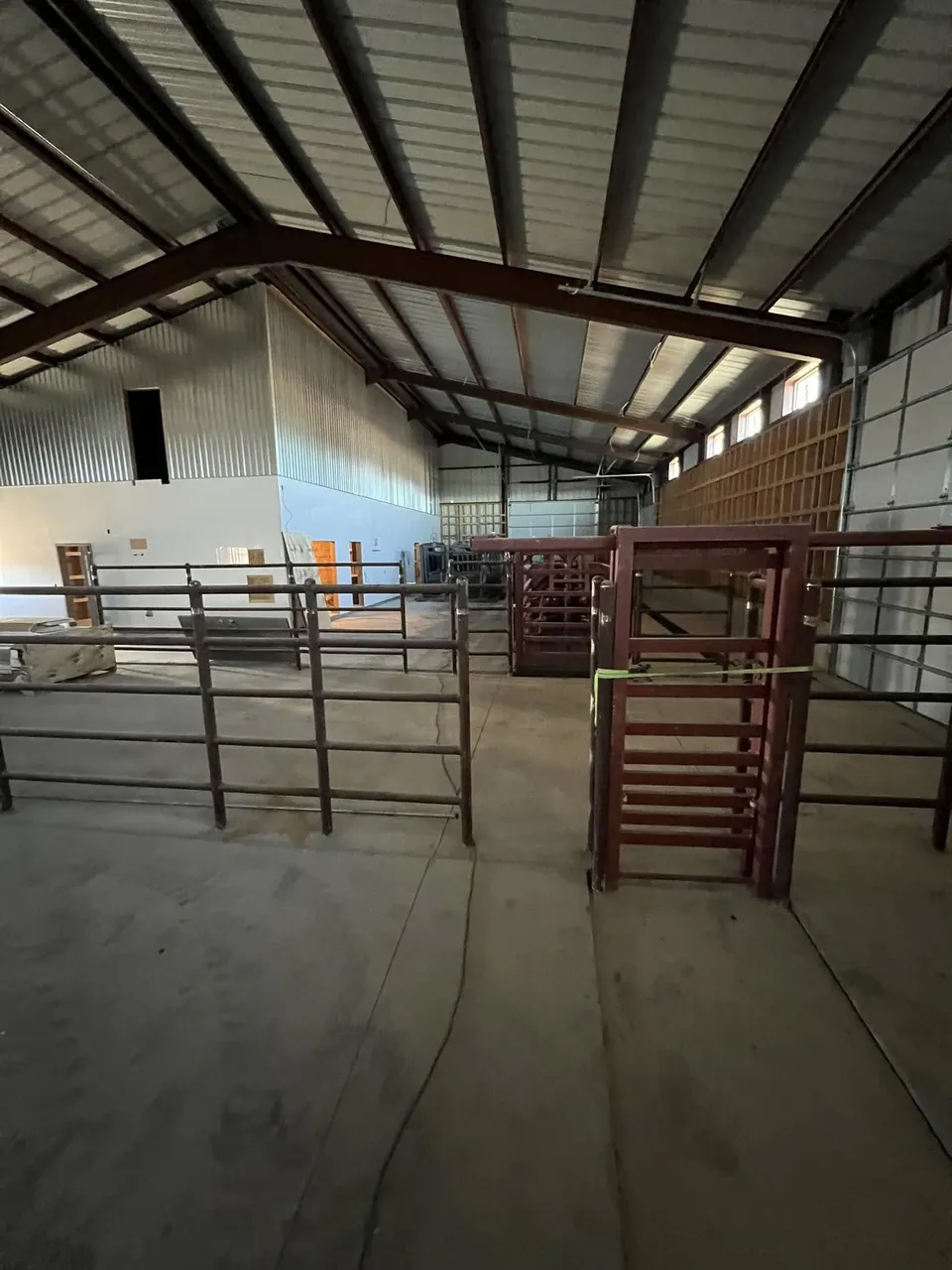
Pipe pens and gates inside a steel barn or covered facility get the same construction approach as outdoor pens — welded in place, sized to the layout, and tied into the structure. We integrate interior pens, alley dividers, and stall fronts directly into the building during construction, or retrofit them into an existing barn.
If you're putting up a new ag building and want a complete working facility under one roof, we can build the steel structure and the interior pens as a single coordinated job.
How We Build Pipe Fence
No bolt-together kits. Welded in place, built to last.
1. Walk & Layout
Site walk, herd size, working flow, and stake out the pen and alley footprint.
2. Set Posts
Pipe posts dropped in augered holes, plumbed, and set in concrete.
3. Weld Rails
Continuous oilfield pipe rails welded directly to posts — no slip connections.
4. Gates & Equipment
Hang gates, integrate working equipment, and final walkthrough with the rancher.
How long does a cattle pen and working facility build take?
A standard set of welded cattle pens with a working alley and chute typically takes 2 to 4 weeks on site, depending on linear footage, gate count, concrete pour times, and whether covered roofing is included. Larger operations with multiple pen blocks and integrated loading ramps run longer. We sequence pad work, post-setting, and welding so the operation can keep running cattle through during the build when needed.
Need a New Set of Pens?
We'll come walk the site and lay it out with you.
Pipe Fencing FAQs
What size pipe do you use for cattle fencing?
Do you weld pipe fence in place or pre-build sections?
Can you build alley chutes with rubber matting?
Last Updated: October 2026
Related Services
Build Pens That Last
Welded pipe construction, set right the first time — for ranchers who work cattle.